Coway Airmega Mighty2 Review: What I’d Know Before Buying the AP-1512N
Choosing an air purifier gets surprisingly complicated once you look beyond the advertised room size. A purifier can claim coverage of 1,800 square feet and still be a questionable choice if your real goal is aggressive air cleaning in a bedroom or living room. What matters more is how much filtered air the machine can move, how quickly it responds to pollution, how well it handles particles versus odors, how loud it becomes, and what it costs to keep running.
That’s what made the Coway Airmega Mighty2, also known as the AP-1512N, interesting to me. After digging through the available research, I see a purifier with strong airflow for its size, a sophisticated particle sensor, impressively quiet operation at useful fan speeds, and a straightforward mechanical filtration approach. But there are also meaningful compromises, particularly the roughly $270 price, lack of app connectivity, bonded filter design, and reports of fan noise problems on some units.
My quick take: I’d seriously consider the Mighty2 if quiet operation, strong particle cleaning, accurate automatic operation, and ozone-free mechanical filtration were my priorities. I would hesitate if I wanted Wi-Fi controls, the lowest possible ownership cost, or a purifier specifically for heavy smoke and odor exposure.
Overview
COWAY Airmega Mighty2 Air Purifier
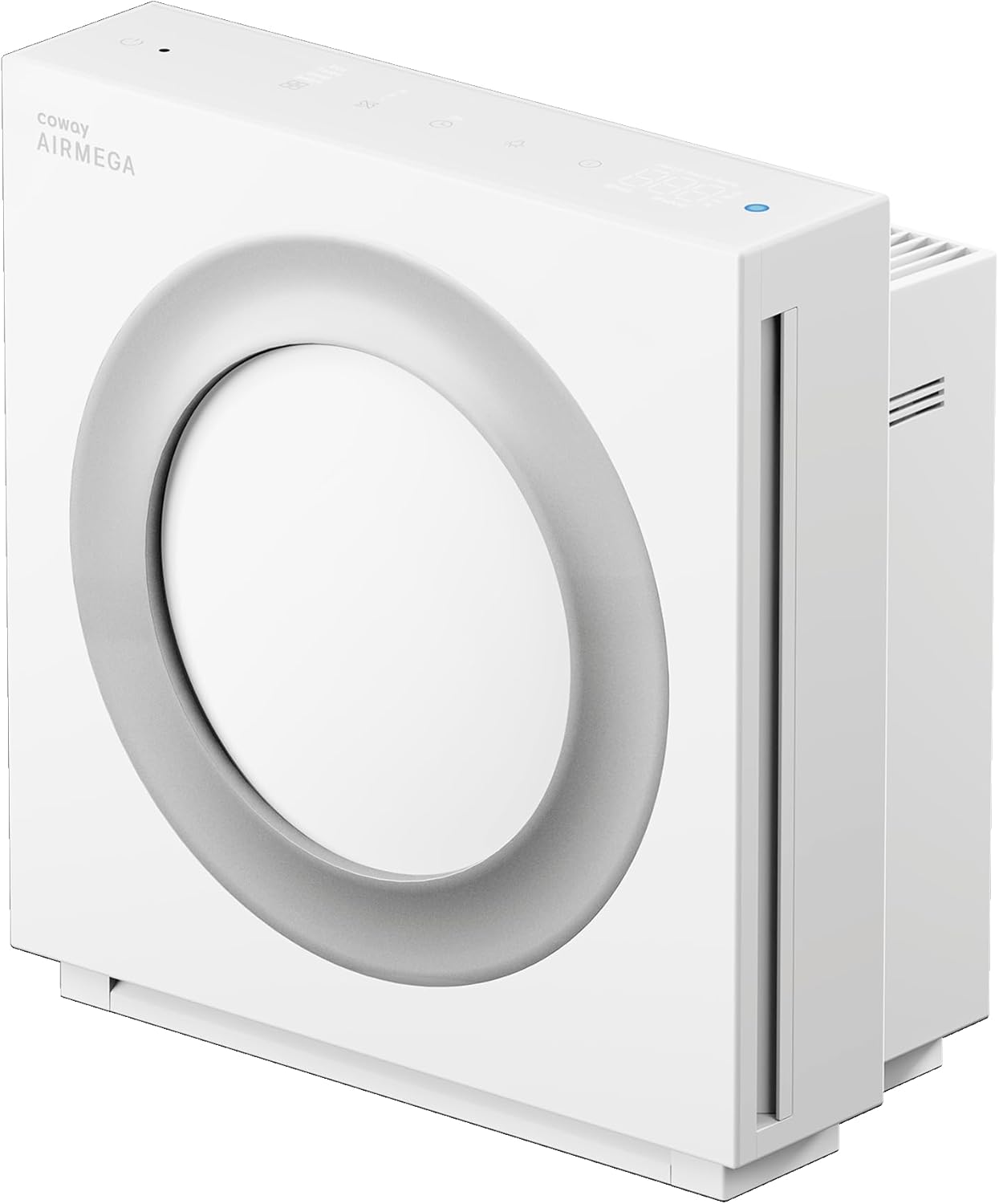

My overall rating
| Category | Rating | My take |
|---|---|---|
| Air-cleaning performance | ★★★★★ 4.7/5 |
Strong CADR and rapid particulate response make this the product’s biggest strength. |
| Noise | ★★★★★ 4.6/5 |
Excellent acoustic balance on normal settings, although reported rattling issues are a concern. |
| Filtration | ★★★★★ 4.6/5 |
HEPA and activated carbon provide a strong combination, but the bonded cartridge limits flexibility. |
| Sensor / Auto Mode | ★★★★★ 4.8/5 |
The MegaScan Laser Sensor is one of the most compelling upgrades. |
| Ease of maintenance | ★★★★☆ 4.4/5 |
The redesigned sliding pre-filter is genuinely convenient. |
| Smart features | ★★☆☆☆ 2.2/5 |
No Wi-Fi, app, Bluetooth, or voice-assistant integration. |
| Value | ★★★☆☆ 3.5/5 |
Performance is compelling, but the price makes the missing smart features harder to ignore. |
| Overall | ★★★★☆ 4.2/5 |
A strong purifier, but not an automatic recommendation for every buyer. |
The important numbers at a glance
| Specification | Mighty2 | Why I’d care |
|---|---|---|
| Model | AP-1512N | Important when shopping for filters or comparing reviews. |
| Price | $269.99 | Puts it firmly into a category where missing features matter. |
| Smoke CADR | 240 CFM | A useful indicator of particle-cleaning capacity. |
| Dust CADR | 242 CFM | Strong airflow for everyday particulate cleaning. |
| Pollen CADR | 249 CFM | Particularly relevant for allergy-focused buyers. |
| Sensor | MegaScan Laser | Allows automatic response to PM1.0, PM2.5 and PM10. |
| Maximum power | 56W | Lower maximum draw than the previous model. |
| Filter life | Approximately 12 months | Predictable recurring maintenance. |
| Filter cost | About $69.99 | Important to the long-term ownership calculation. |
| Wi-Fi / app | No | A major consideration for smart-home buyers. |
The room-size number I’d be careful with
One of the first things I’d look past is the advertised 1,800-square-foot coverage figure. That number is based on only one air change per hour, which is very different from sizing a purifier for aggressive everyday air cleaning.
The more useful number here is CADR. The Mighty2 produces 242 CFM for dust, 249 CFM for pollen, and 240 CFM for smoke. Based on the research, that makes it better suited to roughly 390 square feet when targeting approximately 4.8 to 5 air changes per hour.
| Claim / figure | What I’d take from it |
|---|---|
| 1,800 sq. ft. coverage | Possible at 1 air change per hour, but not the number I’d use for intensive air cleaning. |
| 240–249 CFM CADR | Much more useful when deciding how quickly the purifier can clean a room. |
| 99.97% particle capture | The research notes the HEPA-grade certification applies at lower fan speeds. |
| 12-month filter life | Reasonable for standard use, but heavy odor environments may exhaust carbon earlier. |
Realistic expectation: I would not treat 1,800 square feet as the area where the Mighty2 will provide intensive air cleaning. For a buyer who cares about frequent air turnover, the research points toward approximately 390 square feet as the more useful sizing figure.
What actually makes the Mighty2 interesting
The strongest reason I’d consider this purifier is not any single headline specification. It’s the combination of airflow, low noise, and the MegaScan Laser Sensor.
| Feature | What it does | Why it matters |
|---|---|---|
| MegaScan Laser Sensor | Monitors PM1.0, PM2.5 and PM10. | Allows Auto Mode to respond to changing pollution. |
| 240+ CFM CADR | Moves a substantial amount of filtered air. | More useful than simply looking at the advertised coverage area. |
| Auto Mode | Automatically changes fan speed. | Reduces the need for constant manual adjustment. |
| No ionizer | Uses mechanical and chemical filtration instead. | Appeals to buyers specifically avoiding ionization. |
| Sliding pre-filter | Allows easy removal for cleaning. | Makes recurring maintenance less annoying. |
The noise-to-performance balance is the part I’d actually pay for
A purifier can have excellent CADR on paper and still be annoying enough that you don’t want to run it. That’s where the Mighty2 seems particularly compelling.
| Mode / speed | Noise | Power | My interpretation |
|---|---|---|---|
| Sleep | Very low | Low | Best suited to quiet nighttime operation. |
| Speed 2 | 42.6 dBA | 10.28W | The sweet spot I’d be most interested in for everyday use. |
| Turbo | 56.9 dBA | 49.12W | Useful for pollution spikes, but clearly more noticeable. |
The research describes a 728-cubic-foot test room where the Mighty2 cleared incense-related PM1 pollution in 23 minutes on Turbo and 38 minutes on Speed 2. That makes the quieter setting particularly interesting because it appears capable of substantial cleaning without forcing the purifier into its loudest mode.
Turbo is obviously louder, but I’d expect that setting to be used primarily when pollution suddenly spikes rather than continuously.
There is another important change: no ionizer
Anyone familiar with the previous Coway AP-1512HH should pay attention to this. The Mighty2 removes the Vital Ionizer entirely and relies on mechanical HEPA filtration plus activated carbon.
| Component | Role | What I’d expect from it |
|---|---|---|
| Washable pre-filter | Captures larger particles. | Helps protect the main filter and needs regular cleaning. |
| HEPA media | Captures fine airborne particles. | The main reason I’d consider it for particulate pollution and allergens. |
| Activated carbon | Targets odors and gaseous pollutants. | Useful, but the bonded design can become costly for heavy odor exposure. |
| Ionizer | Not included. | A significant advantage for buyers who specifically want mechanical filtration. |
The filter design creates a genuine ownership trade-off
The Max2 cartridge combines the HEPA and activated-carbon media into one bonded filter. Under standard use, the cartridge is expected to last approximately 12 months and costs about $69.99 to replace.
| Task | Frequency | Cost / effort | My take |
|---|---|---|---|
| Clean pre-filter | Every 2–4 weeks | Low | Easy enough to make part of a normal cleaning routine. |
| Replace Max2 filter | Approximately annually | About $69.99 | Reasonable for standard use, but potentially expensive in heavy-smoke environments. |
| HEPA washing | Not recommended | N/A | Only the outer pre-filter is washable. |
The problem appears when odors are the priority. Heavy smoking, frequent frying, or high VOC exposure can exhaust the carbon portion before the HEPA portion is physically spent. Because the two layers are bonded together, the entire cartridge has to be discarded.
That’s the ownership scenario I’d be most concerned about.
How the Mighty2 fits different types of buyers
| Buyer / situation | Fit | Rating | Why |
|---|---|---|---|
| Allergy sufferers | Excellent | ★★★★★ | Strong particle performance and PM sensing. |
| Pet owners | Very good | ★★★★½ | Good particle and odor-control combination. |
| Light sleepers | Excellent | ★★★★★ | Low-speed operation is particularly attractive. |
| Smart-home enthusiast | Poor | ★★☆☆☆ | No Wi-Fi, app, Bluetooth, or voice assistant. |
| Heavy smoker | Below average | ★★★☆☆ | Carbon can become exhausted before the HEPA media. |
| Budget shopper | Mixed | ★★★☆☆ | The purifier is capable, but the upfront price is high. |
One interface detail could confuse you every day
Coway’s air-quality colors don’t follow the color associations many people already know. Blue means clean, Green means moderate, Yellow/Orange indicates unhealthy conditions, and Red means very unhealthy conditions.
| Color | Meaning | What I’d do |
|---|---|---|
| Blue | Clean | Treat it as the good result. |
| Green | Moderate | Don’t assume green means pristine air. |
| Yellow / Orange | Unhealthy | Expect the purifier to increase airflow. |
| Red | Very unhealthy | This indicates a significant pollution level. |
Where I’d hesitate before spending $270
The biggest issue isn’t filtration performance. It’s value.
At approximately $269.99, the Mighty2 costs substantially more than the Winix 5510 and Levoit Vital 200S listed in the research. Both competitors offer smart connectivity, while the Coway has no Wi-Fi, Bluetooth, mobile app, or voice-assistant integration.
| Weakness | Why it matters | Who should care most? |
|---|---|---|
| No app or Wi-Fi | No remote control, scheduling, or smart-home integration. | Smart-home users. |
| Bonded HEPA/carbon filter | The entire cartridge must be replaced when carbon becomes exhausted. | Heavy smokers and high-odor households. |
| $269.99 price | Makes competing features more difficult to overlook. | Budget-conscious buyers. |
| Reported ticking / rattling | A defective or problematic unit could undermine the biggest selling point: quiet operation. | Light sleepers and buyers sensitive to mechanical noise. |
| Unusual AQI colors | Green doesn’t mean clean. | Anyone relying heavily on the LED indicator. |
How I’d choose between the Mighty2, Winix 5510 and Levoit Vital 200S
| Feature | Coway Mighty2 | Winix 5510 | Levoit Vital 200S |
|---|---|---|---|
| Approx. price | $269.99 | $179.99 | $189.99 |
| Smoke CADR | 240 CFM | 252 CFM | 240 CFM |
| Smart features | None | Wi-Fi / app | Wi-Fi / app |
| Sensor | Laser | Odor / VOC gas sensor | Infrared particle sensor |
| Ionization | No | PlasmaWave | No |
| Annual filter cost | ~$69.99 | ~$79.99 | ~$49.99 |
If quiet operation is my priority, I’d lean toward the Mighty2. If smart controls and purchase price matter more, the Winix 5510 or Levoit Vital 200S become much more attractive.
Who I’d buy the Mighty2 for
| If this sounds like you… | My recommendation | Why |
|---|---|---|
| I want strong particle cleaning in a medium-sized room. | ★★★★★ | The CADR and sensor combination is compelling. |
| I am a light sleeper. | ★★★★★ | Low-speed operation is one of its strongest advantages. |
| I don’t want an ionizer. | ★★★★★ | The Mighty2 relies on mechanical and chemical filtration. |
| I want a phone app. | ★☆☆☆☆ | This isn’t the right product for that priority. |
| I primarily need heavy odor removal. | ★★★☆☆ | The bonded carbon/HEPA filter can increase running costs. |
Who I’d look elsewhere
I wouldn’t choose the Mighty2 if smart-home control were high on my list. At this price, the absence of Wi-Fi and an app is difficult to ignore.
I’d also look elsewhere if I were dealing with continuous cigarette smoke or very heavy cooking fumes. The bonded Max2 filter means carbon exhaustion can force replacement of the entire cartridge.
Finally, I’d be cautious if mechanical noise would be a deal-breaker. The intended acoustic performance is one of the Mighty2’s best qualities, which makes the reports of ticking and rattling particularly important.
My buying verdict
After digging through the research, I think the Coway Airmega Mighty2 makes the most sense when the core job is the priority: moving a lot of filtered air without creating an especially intrusive noise problem.
| Question | My answer |
|---|---|
| Would I buy it for particle cleaning? | Yes — ★★★★★ |
| Would I buy it for a bedroom? | Yes — ★★★★★ |
| Would I buy it for heavy odors? | Maybe — ★★★☆☆ |
| Would I buy it for smart-home integration? | No — ★☆☆☆☆ |
| Would I pay the premium for quiet operation? | Yes, if quietness is a priority — ★★★★½ |
| Overall recommendation | Recommended for the right buyer — ★★★★☆ 4.2/5 |
The MegaScan Laser Sensor is another major reason I’d consider it. The ability to monitor PM1.0, PM2.5, and PM10 and automatically respond to sudden pollution makes the purifier feel more purposeful than a basic fan-and-filter appliance.
But I’d go into the purchase knowing exactly what I’m giving up. There is no app, no Wi-Fi, and no voice control. The Max2 filter combines HEPA and carbon, which isn’t ideal for heavy odor exposure. The price is considerably higher than some capable competitors. And the reported fan-noise quality-control issue is something I’d keep in mind.
If I were buying specifically for a roughly 300–400-square-foot room and cared more about quiet, automatic particle cleaning and ozone-free filtration than smartphone controls, I’d have a hard time dismissing the Mighty2. That’s where its combination of performance, sensor technology, and acoustic comfort makes the premium easiest to justify.
If, however, I wanted the cheapest effective option or expected a modern smart-home experience, I’d look at the alternatives instead.
The bottom line: the Mighty2 isn’t compelling because it has every feature. It’s compelling because it appears to focus heavily on the parts of an air purifier that actually affect everyday air cleaning—and does so while keeping noise under control. For the right buyer, that’s worth paying for. For everyone else, the premium needs to be justified very carefully.