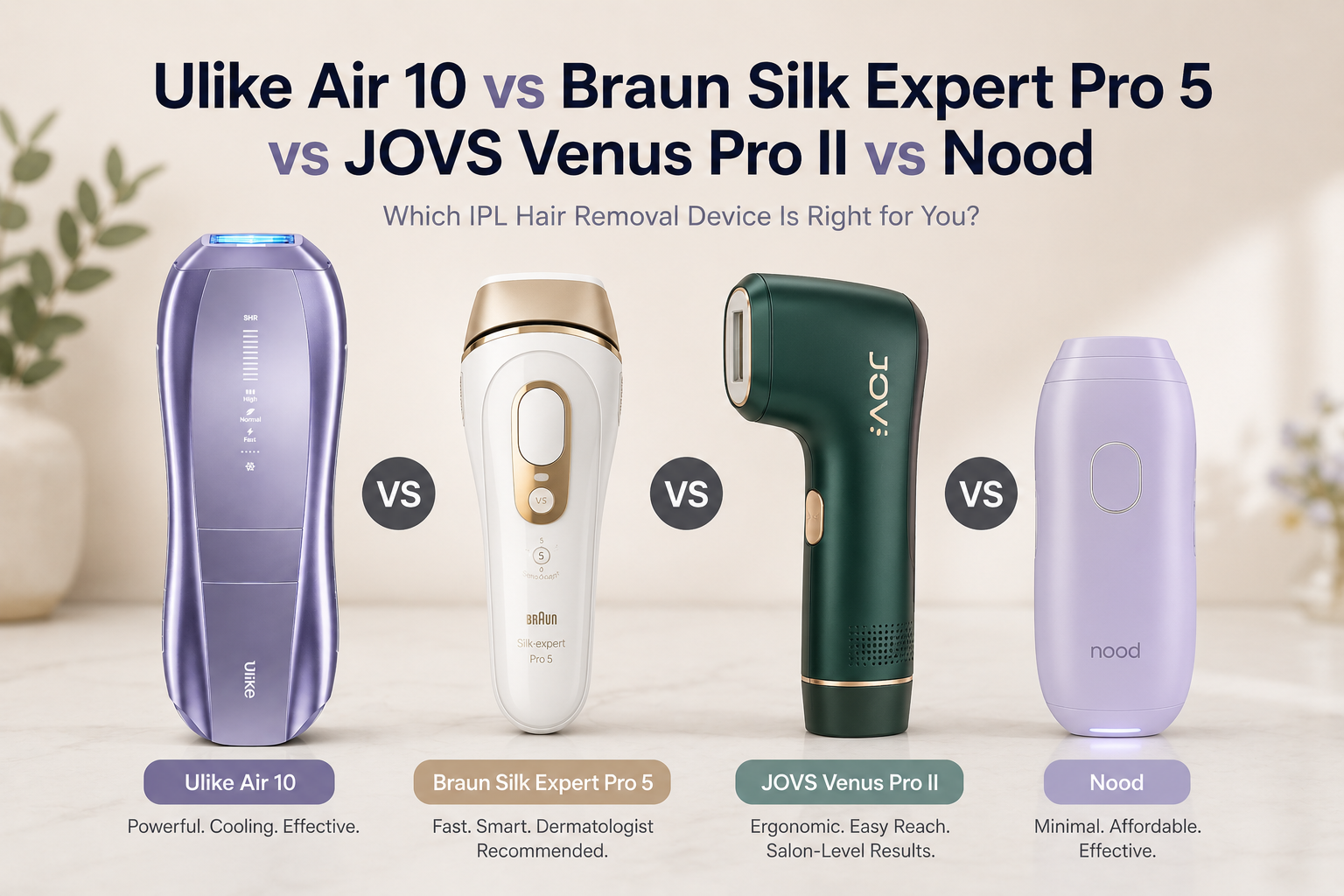
Ulike Air 10 vs Braun Silk Expert Pro 5 vs JOVS Venus Pro II vs Nood: Which IPL Hair Removal Device Makes the Most Sense?
Choosing an at-home IPL hair removal device isn’t really about finding the machine with the biggest number on the box. The more important questions are much more practical: How comfortable is the treatment? How quickly can you cover a large area? Can the device handle stubborn hair? Is it easy to position on awkward parts of the body? And, perhaps most importantly, will you actually stick with the treatment schedule long enough to see meaningful results?
That last point matters because IPL works through repeated treatments rather than a single session. A device that is theoretically powerful but uncomfortable, cumbersome, or frustrating to use can end up being a poor purchase if it makes you abandon the routine.
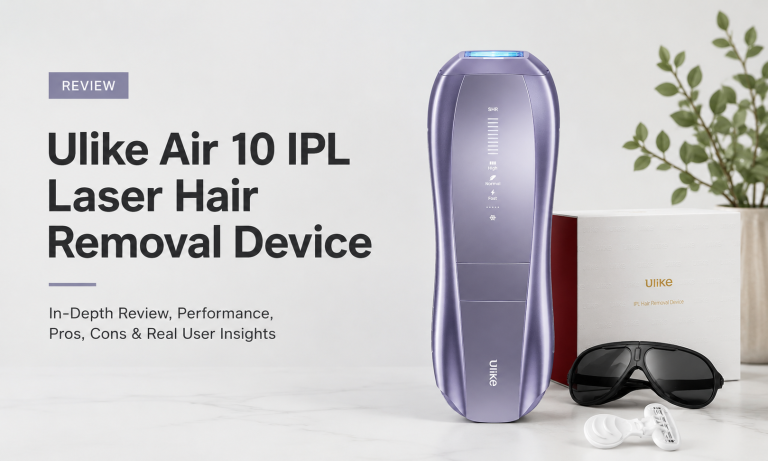
After digging through the available research on the Ulike Air 10, Braun Silk Expert Pro 5, JOVS Venus Pro II, Nood The Flasher 2.0/Pro, and Ulike Air 3, I think the comparison becomes surprisingly clear. Each device emphasizes something different. The Ulike Air 10 is particularly interesting because it combines high energy output with aggressive active cooling, while Braun puts more emphasis on speed and maneuverability. JOVS takes a different approach to ergonomics and cooling, and Nood keeps things simpler.
My short verdict: If my biggest concern were pain and I had fair-to-medium skin with dark, stubborn hair, the Ulike Air 10 would be my pick. If speed, lighter handling, and faster full-body coverage mattered more, I’d look closely at the Braun Silk Expert Pro 5. JOVS makes more sense if maneuverability around difficult body areas is a priority, while the older Ulike Air 3 remains attractive for buyers who value a lighter design and much higher flash capacity.
My overall ratings at a glance
| Device | Comfort | Speed | Stubborn Hair | Ergonomics | Overall |
|---|---|---|---|---|---|
| Ulike Air 10 | ★★★★★ | ★★★★☆ | ★★★★★ | ★★★☆☆ | ★★★★★ 4.5/5 |
| Braun Silk Expert Pro 5 | ★★★☆☆ | ★★★★★ | ★★★★☆ | ★★★★★ | ★★★★☆ 4.4/5 |
| JOVS Venus Pro II | ★★★★★ | ★★★★☆ | ★★★☆☆ | ★★★★★ | ★★★★☆ 4.2/5 |
| Nood The Flasher 2.0 / Pro | ★★★☆☆ | ★★★☆☆ | ★★★☆☆ | ★★★★☆ | ★★★★☆ 3.8/5 |
| Ulike Air 3 | ★★★★☆ | ★★★★☆ | ★★★★☆ | ★★★★★ | ★★★★☆ 4.1/5 |
These ratings are my interpretation of the research rather than laboratory scores. More importantly, I wouldn’t treat the overall number as a universal ranking. The right device changes depending on what matters most to you.
The first thing I’d check before comparing any of these devices
Before worrying about cooling, flash speed, ergonomics, or energy output, I’d determine whether IPL is appropriate for the combination of skin and hair color in the first place.
The underlying principle is fairly straightforward: IPL uses broad-spectrum light to target melanin in the hair. The strongest contrast between the hair and surrounding skin gives the optical energy a better target.
| Buyer profile | Expected suitability | Why it matters |
|---|---|---|
| Fair to medium skin with dark brown/black hair | Best match | Provides the contrast IPL needs to target hair pigment. |
| Light blonde, red, grey or white hair | Poor match | The report indicates insufficient dark melanin for effective optical targeting. |
| Fitzpatrick V–VI skin | Not suitable | The report indicates the devices’ safety systems may prevent firing because of the increased risk from absorbed light energy. |
Important: Skin and hair compatibility comes before every other comparison in this article. A device with more power or better cooling does not overcome a biological mismatch.
Ulike Air 10 vs Braun Silk Expert Pro 5: comfort or speed?
This is the comparison I’d pay the most attention to because the two devices take almost opposite approaches.
| Factor | Ulike Air 10 | Braun Silk Expert Pro 5 | My take |
|---|---|---|---|
| Maximum energy | 26 J in SHR mode | Approximately 20 J | Ulike has the higher reported output. |
| Cooling | 65°F Sapphire Ice-Cooling | No active cooling | This is the Ulike’s defining advantage. |
| Flash speed | 0.5 sec in Fast mode | 0.5 sec continuous | Braun is regarded as faster overall in practical use. |
| Skin sensing | Automatic adjustment | Automatic adjustment, 80 readings/sec | Both emphasize automatic adjustment. |
| Weight/handling | 14.4 oz, straight wand | Lighter, slim tapered design | Braun has the ergonomic advantage. |
The Air 10’s most compelling argument is that it attempts to solve the discomfort problem without sacrificing substantial optical power. Its Sapphire Ice-Cooling system maintains a reported contact temperature of 65°F, and user feedback consistently identifies cooling as the device’s biggest advantage.
That makes the Air 10 particularly interesting for someone who has avoided IPL because previous devices became too hot or uncomfortable. I’d rather have a device that I can comfortably use consistently than one that is marginally faster but makes sensitive areas unpleasant.
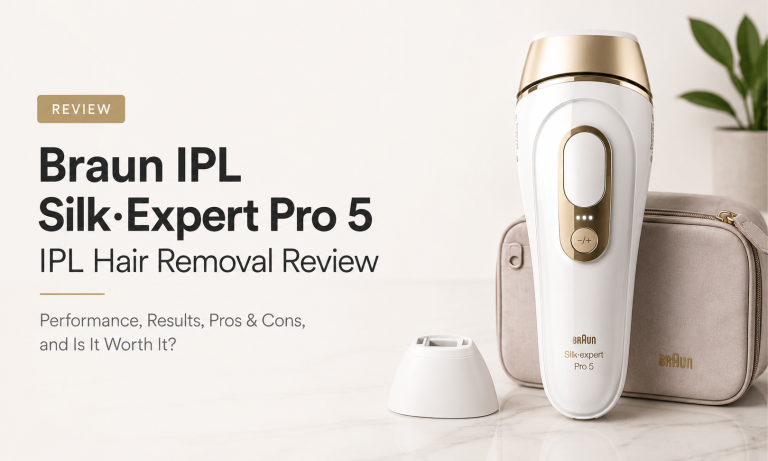
But Braun has a very real advantage. The Pro 5 is lighter, more maneuverable, and faster. If I were primarily treating large areas and cared more about finishing quickly than having an ice-cold treatment window, the Braun becomes a much more logical choice.
My choice: Ulike Air 10 for pain-sensitive users; Braun Silk Expert Pro 5 for buyers who prioritize speed and lighter handling.
Ulike Air 10 vs JOVS Venus Pro II: power versus maneuverability
The JOVS Venus Pro II is particularly interesting because it addresses one of the Ulike Air 10’s biggest weaknesses: getting around difficult body contours.
| Category | Ulike Air 10 | JOVS Venus Pro II |
|---|---|---|
| Cooling | 65°F sapphire cooling | Sapphire cooling, reported at 40°F |
| Energy | 26 J in SHR mode | 6 J/cm² |
| Head design | Straight wand | L-shaped with 330° rotating head |
| Reported flash speed | 0.5 sec in Fast mode | 0.7 sec |
For me, the biggest distinction is the physical design. The Air 10 has a rigid, flat treatment window that can be difficult to position on ankles, shins, knees, and the jawline. JOVS’s rotating head is specifically designed to make awkward areas easier to reach.
The trade-off is power. The research positions the Ulike Air 10 as the substantially more powerful option, particularly when its 26-joule SHR mode is used for coarse or stubborn hair.
If my biggest frustration were reaching the backs of my legs or other awkward areas, I’d give JOVS serious consideration. If my priority were aggressive treatment of stubborn hair, I’d lean toward the Air 10.
Ulike Air 10 vs Ulike Air 3: is the newer model actually better?
This is not as simple as assuming the Air 10 wins because it is newer.
| Factor | Ulike Air 10 | Ulike Air 3 |
|---|---|---|
| Maximum reported energy | 26 J | 21 J |
| Lamp architecture | Dual lamp | Single lamp |
| Flash lifespan | 300,000 | 1,000,000 |
| Weight/design | Heavier, approximately 14.4 oz | Lighter and more compact |
| Best fit | Thick, stubborn or hormonal hair | Fine/easier-to-treat hair and buyers prioritizing portability |
The Air 3 actually wins in some areas. Its 1,000,000-flash lifespan is dramatically higher, and its lighter, more compact construction should appeal to anyone who dislikes holding a heavier wand for long sessions.
The reason I’d choose the Air 10 instead is its higher energy output and dual-lamp architecture. For thick, stubborn, or hormonally driven hair, those characteristics are more important to me than having an enormous theoretical flash count.
In other words, I wouldn’t upgrade from the Air 3 simply because the Air 10 is newer. I’d upgrade because I specifically wanted the additional power and SHR mode.
Where does Nood fit into the comparison?
Nood The Flasher 2.0/Pro occupies a less aggressive position in this comparison. The available research describes its energy output as moderate and unspecified, with no comparable active cooling system.
| Feature | Ulike Air 10 | Nood Flasher 2.0 / Pro |
|---|---|---|
| Cooling | Active sapphire cooling | No/minimal metal contact cooling |
| Energy output | Up to 26 J | Unspecified/moderate |
| Lamp design | Dual light | Single light |
| Ergonomics | Straight, heavier wand | Straight, compact |
I’d be more inclined toward Nood if simplicity and a compact form mattered more than maximum output and active cooling. But for a buyer specifically looking for a high-powered device designed around comfort, the Air 10 has a much clearer argument.
The feature I think changes the entire Air 10 comparison
The Air 10’s most important feature isn’t actually its 26-joule number. It’s what Ulike does with that power.
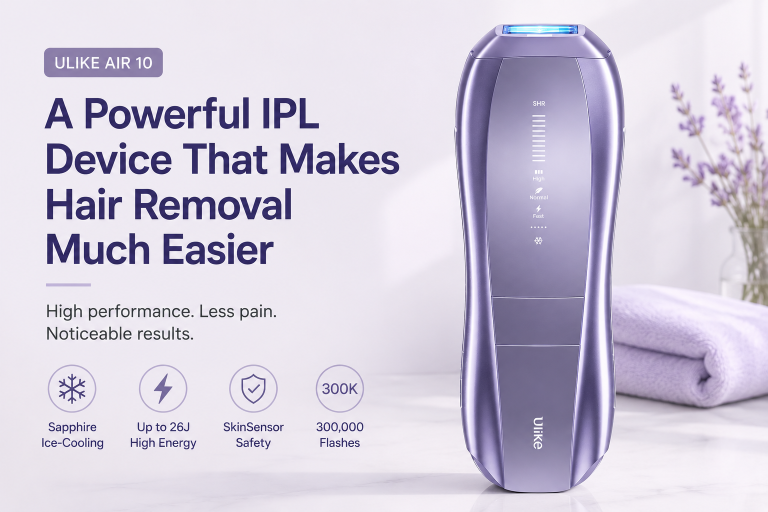
High optical energy can create substantial heat. The Air 10 addresses this with a thermoelectric cooling plate and sapphire treatment window designed to maintain a reported contact temperature of 65°F.
That’s why the Air 10 stands apart from the Braun comparison. Braun is faster and lighter, but it doesn’t have the same active cooling approach. The research repeatedly identifies cooling as the Air 10’s strongest point, with many users describing treatment on larger areas as essentially painless.
For someone who has stopped using IPL devices because of discomfort, that’s not a cosmetic extra. It directly affects whether the treatment schedule is sustainable.
What convinced me: The Air 10’s strongest buying argument isn’t simply “more power.” It’s the combination of high reported energy output and active cooling. That combination makes the device particularly compelling for buyers who need substantial treatment capability but are unwilling to tolerate the heat associated with some other high-powered IPL devices.
But the Air 10 gives back some of that advantage in other areas
The cooling system doesn’t come without trade-offs.
The device draws 90W and uses active thermoelectric cooling plus fans. During extended sessions, the internal components can become hot enough to trigger thermal throttling. The contact window can remain cold while the exterior and rear vents become noticeably warm.
For someone doing a short treatment area, this may not matter much. For someone attempting a meticulous full-body session, it can become a genuine inconvenience.
| Advantage | Trade-off | Who should care? |
|---|---|---|
| Very strong cooling | Generates substantial internal heat and fan noise | Especially full-body users |
| 26J SHR output | SHR can make sessions slower | Users treating stubborn areas |
| Rigid contact window | Difficult contact on bony contours | Users treating shins, ankles, knees and jawline |
| Heavy-duty construction | 14.4 oz weight can cause fatigue | Long treatment sessions |
| Large flash capacity | Still requires ongoing maintenance treatments | Buyers expecting permanent removal |
The “10-minute full-body” claim deserves some skepticism
This is probably the biggest expectation I would correct before buying the Air 10.
The marketing claim suggests that AutoGlide can make full-body treatment extremely fast. The research, however, paints a more complicated picture. A 0.5-second flash interval in Fast mode can certainly make rapid coverage possible, but meticulous users report substantially longer sessions.
Once you account for careful positioning, overlapping passes, difficult contours, higher-power settings, and possible thermal pauses, a realistic full-body session can take approximately 30 to 60 minutes according to the supplied research, with some users reporting even longer sessions.
| Claim or expectation | What the research suggests |
|---|---|
| Full-body treatment in 10 minutes | Meticulous full-body treatment is more realistically around 30–60 minutes, with some users taking longer. |
| Permanent hair removal | The research emphasizes long-term hair reduction with continuing maintenance. |
| Visible results in two weeks | Early thinning and slower growth are more realistic expectations than complete hairlessness. |
| One treatment solves the problem | Consistent treatments are required, followed by periodic maintenance. |
Realistic expectation: I would not buy the Air 10 expecting a 10-minute, once-and-done treatment. I’d buy it expecting a repeated routine that can produce noticeable thinning early and progressively better reduction over the following weeks.
Which device is best for stubborn or coarse hair?
This is where I’d put the Ulike Air 10 ahead of most of the alternatives in this comparison.
The device reaches a reported 26 joules in SHR mode and uses dual lamps. The research specifically identifies the SHR mode as useful for stubborn areas such as the bikini line, underarms, and male chest.
The distinction matters because not every buyer has the same type of hair. Someone with relatively fine, easy-to-treat hair may not benefit enough from the Air 10’s heavier construction and higher output to justify its trade-offs.
But if I were dealing with thick, coarse, stubborn hair and had the skin/hair combination required for IPL, the additional power would be much more meaningful to me.
| Situation | Device I’d favor | Reason |
|---|---|---|
| Thick or stubborn hair | Ulike Air 10 | 26J SHR mode and dual-lamp design. |
| Fast full-body coverage | Braun Pro 5 | Faster operation and lighter handling. |
| Difficult body contours | JOVS Venus Pro II | 330° rotating head and L-shaped design. |
| Fine/easier hair and lightweight design | Ulike Air 3 | Lighter, more compact, and 1,000,000-flash lifespan. |
| Pain-sensitive buyer | Ulike Air 10 | The active cooling system is its defining advantage. |
What about comfort?
If comfort were the only category I was scoring, the Air 10 would be difficult to beat based on the supplied research.
The 65°F cooling plate is repeatedly identified as the device’s strongest point. On broad areas such as arms, legs, and back, users commonly describe the sensation as cold rather than painful. Higher settings on sensitive areas can still produce warmth or a brief snap, so I wouldn’t interpret “painless” as an absolute guarantee for every body area.
This is another reason the Braun comparison is interesting. Braun may be the better tool for someone who wants to get the job done as quickly as possible. But if discomfort is the reason you’ve stopped using IPL devices in the past, the Air 10’s slower, colder approach makes more sense.
The ergonomic problem I wouldn’t ignore
The Air 10’s biggest physical weakness is its combination of weight and shape.
At 14.4 ounces, it isn’t enormous, but holding a relatively heavy straight wand for a 45-minute treatment is different from holding it for a few minutes. The research includes reports of wrist and forearm fatigue, particularly when reaching difficult areas such as the backs of the thighs and posterior bikini area.
The flat treatment window also has a practical consequence. The device needs proper contact at approximately 90 degrees before it will fire. That is easy on broad, flat surfaces but much harder around ankles, knees, shins, and the jawline.
This is exactly where JOVS’s rotating head becomes more than a cosmetic design feature. Its ergonomics address a problem that Ulike hasn’t completely solved.
Which device has the best long-term ownership proposition?
The Air 10’s 300,000-flash lifespan is already far beyond what most individual users are likely to exhaust quickly. The supplied research estimates that this represents many years of full-body use, and the device has no recurring flash-cartridge purchases.
Interestingly, the older Air 3 has a much larger 1,000,000-flash rating. That sounds like an obvious win until you consider how much of that capacity an individual user is realistically going to consume.
| Device | Flash capacity | Recurring flash costs | Ownership consideration |
|---|---|---|---|
| Ulike Air 10 | 300,000 | None reported | Capacity is extremely high for an individual user. |
| Ulike Air 3 | 1,000,000 | None reported | Much higher rated flash capacity, plus lighter design. |
| Braun Pro 5 | Not specified in the supplied comparison | Not specified | The supplied research emphasizes speed and ergonomics instead. |
| JOVS Venus Pro II | Not specified | Not specified | The key advantage in the research is maneuverability and cooling. |
One unusual advantage: smoother-looking skin
One of the more interesting findings in the research isn’t directly about hair reduction at all.
Users frequently report improvements in the appearance of “strawberry legs” and a reduction in ingrown hairs. The proposed reason is straightforward: shaving leaves the hair root beneath the skin, whereas reducing the hair at the follicle can reduce the dark subsurface appearance associated with freshly shaved hair.
I wouldn’t buy an IPL device solely for this secondary benefit, but if someone is already frustrated by razor bumps, ingrown hairs, or the dotted appearance of shaved legs, it adds another potential reason to value consistent treatment.
What happens if the Air 10 suddenly stops flashing?
This is one of the most useful practical findings in the research because a stopped flash doesn’t necessarily mean the lamps have failed.
The report describes a recurring firmware hang in which the fans and indicator lights can continue operating while the device refuses to emit light. Community troubleshooting identifies a hard reset as the solution: unplug the device, hold the power button for approximately 10–15 seconds to drain residual charge, then reconnect it.
Worth knowing:
- Unplug the Air 10 from the wall.
- Press and hold the power button for approximately 10–15 seconds.
- Reconnect the device.
- Test whether normal flashing has returned.
This troubleshooting information comes from the supplied research report. If a device remains malfunctioning, the manufacturer’s support and warranty process should be considered rather than opening the sealed unit.
Testimonials: what different users actually reported
The research doesn’t show a single universal Air 10 experience. Instead, the feedback falls into three very different patterns.
| User type | What they tend to report | What it tells me |
|---|---|---|
| Compliant user | Very little pain, substantial thinning, and smoother-looking skin after consistent treatments. | The device can be highly compelling when biology and consistency are on its side. |
| Inconsistent user | Good thinning but frustration with session length, weight, noise, and the need to maintain the schedule. | The device doesn’t eliminate the discipline required by IPL. |
| Frustrated user | Problems getting the sensor to recognize difficult contours or dealing with an occasional stopped-flashing issue. | The hardware and firmware have practical limitations that shouldn’t be ignored. |
That split is important because it explains why reviews can appear contradictory. Someone with fair skin, dark coarse hair, good treatment consistency, and a low pain tolerance is almost the perfect Air 10 customer. Someone who wants a five-minute treatment, dislikes cords, struggles with routines, or has difficult body contours may feel very differently.
Which device would I choose for each type of buyer?
| If your priority is… | I’d choose… | Why |
|---|---|---|
| Minimum treatment discomfort | Ulike Air 10 | Its active sapphire cooling is the standout feature. |
| Fastest treatment | Braun Pro 5 | The research gives Braun the advantage in speed. |
| Difficult body areas | JOVS Venus Pro II | Its rotating head is better suited to contours. |
| Maximum Air 10-style power | Ulike Air 10 | 26J SHR output is the highest reported energy figure in the comparison. |
| Lightweight Ulike design | Ulike Air 3 | It is lighter and more compact. |
| Stubborn/coarse hair with low pain tolerance | Ulike Air 10 | This is where the combination of high energy and cooling makes the most sense. |
Who should buy the Ulike Air 10?
I think the Air 10 makes the strongest case for a fairly specific buyer.
- You have fair-to-medium skin and dark hair. The underlying IPL physics make this the most compatible combination identified in the research.
- Your hair is thick, coarse, stubborn, or hormonally influenced. The higher reported energy output and SHR mode are particularly relevant here.
- Pain is your biggest concern. The active cooling system is the central reason I’d choose the Air 10 over a faster but hotter alternative.
- You are willing to follow a routine. The device requires repeated treatments rather than occasional use.
- You want to avoid recurring flash-cartridge costs. The 300,000-flash closed system provides a very large rated capacity.
Who should choose something else?
I wouldn’t choose the Air 10 automatically just because it has the highest reported energy output.
- If speed is your absolute priority: I’d look at the Braun Silk Expert Pro 5.
- If awkward body contours are your biggest concern: the JOVS Venus Pro II’s rotating head is more appealing.
- If you want the lightest Ulike option: the Air 3 has a clear ergonomic advantage.
- If you dislike cords: the Air 10 is a poor match because it requires continuous wall power.
- If you won’t commit to regular treatments: I wouldn’t buy any of these expecting a quick, one-time solution.
- If you have light blonde, red, grey, or white hair: the supplied research indicates that IPL will not provide the required optical targeting.
- If your skin falls into Fitzpatrick V or VI: the supplied research indicates that the device is not appropriate because of safety lockouts and the risk associated with high melanin absorption.
The final decision: which IPL should you actually buy?
After comparing these devices, I don’t think there is one universal winner. The more useful question is which compromise you’re willing to make.
The Ulike Air 10 is the device I’d choose if comfort and stubborn-hair performance were my priorities. Its combination of reported 26-joule output, dual-lamp architecture, SHR mode, and 65°F sapphire cooling gives it a particularly compelling identity. It isn’t simply trying to be another fast IPL device; it is trying to make higher-powered treatment substantially more comfortable.
But that comes with real compromises. The Air 10 is heavier, noisy, corded, slower in demanding treatment modes, and frustrating to position on certain contours. Thermal throttling can also turn a supposedly quick full-body session into a much longer process.
The Braun Silk Expert Pro 5 makes more sense to me if speed and maneuverability come first. Its lighter design and faster operation are meaningful advantages, especially for someone treating large areas regularly. The major trade-off is the lack of the Air 10’s active cooling.
I’d consider the JOVS Venus Pro II if ergonomics are the deciding factor. Its rotating head solves a practical problem that the rigid Air 10 design doesn’t completely overcome. The compromise is its lower reported energy output.
The Ulike Air 3 remains worth considering rather than being dismissed as an obsolete predecessor. Its much higher 1,000,000-flash rating and lighter construction make it attractive for buyers with easier-to-treat hair who don’t specifically need the Air 10’s additional power.
| Device | Best reason to buy | Biggest compromise | Overall rating |
|---|---|---|---|
| Ulike Air 10 | High reported power combined with exceptional active cooling | Weight, noise, contour contact and potential thermal pauses | ★★★★★ 4.5/5 |
| Braun Silk Expert Pro 5 | Speed and lightweight maneuverability | No comparable active cooling | ★★★★☆ 4.4/5 |
| JOVS Venus Pro II | Excellent maneuverability and sapphire cooling | Lower reported energy output | ★★★★☆ 4.2/5 |
| Ulike Air 3 | Lightweight design and 1,000,000-flash rating | Lower output and single-lamp design | ★★★★☆ 4.1/5 |
| Nood The Flasher 2.0 / Pro | Compact, straightforward approach | Less compelling cooling and output story | ★★★★☆ 3.8/5 |
If I had the right skin and hair combination, struggled with thick or stubborn hair, and had previously avoided IPL because of discomfort, I’d choose the Ulike Air 10. That’s the situation in which its design makes the most sense to me.
If I cared more about finishing treatments quickly, I’d choose the Braun Silk Expert Pro 5. If reaching awkward areas were my biggest problem, I’d lean toward the JOVS Venus Pro II. And if I simply wanted a lighter Ulike with an enormous flash rating and didn’t need the Air 10’s extra power, I’d still consider the Air 3.
The most important thing I’d understand before ordering any of them is that the device itself is only half the equation. Skin and hair compatibility, correct preparation, consistent treatment, careful coverage, and willingness to continue with maintenance all determine whether the purchase makes sense.
For me, that’s ultimately why the Ulike Air 10 earns the highest overall score in this particular comparison: not because it is the fastest or easiest device, but because its combination of high reported power and aggressive cooling addresses one of the biggest reasons people struggle to stay consistent with IPL in the first place.